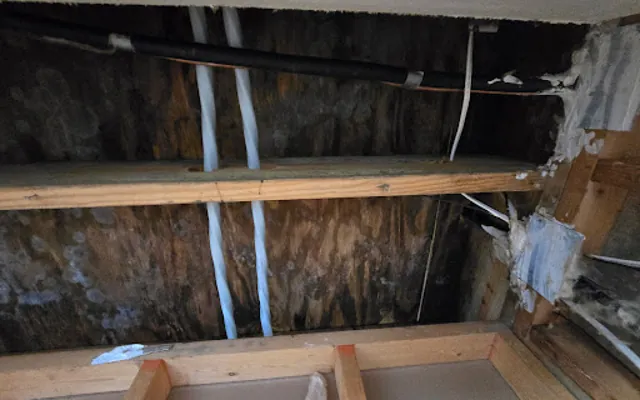
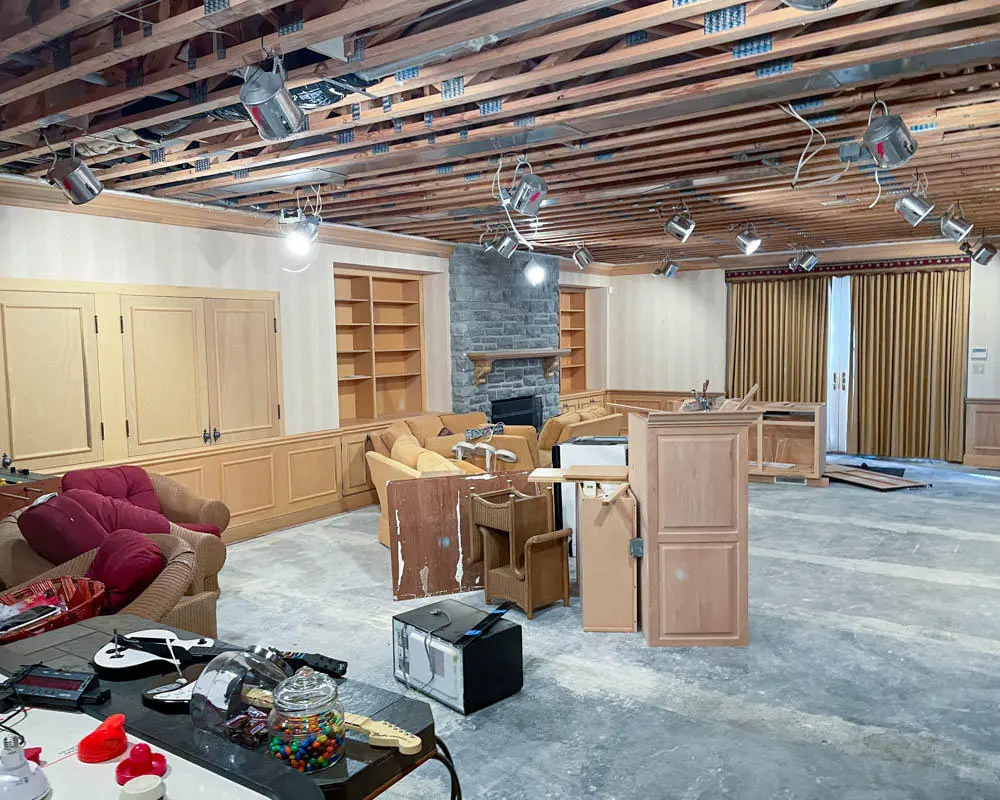
Attics across El Cajon take on water from more sources than most homeowners expect, from rooftop swamp cooler pans to cracked roof sealant to HVAC condensate lines, and the damage is rarely visible until it reaches the ceiling below. Technicians access the attic, map how far moisture traveled through insulation and decking, and start drying before framing is compromised.

The technician accesses the attic, identifies whether the source is roofing, cooler, or HVAC-related, and confirms the leak has stopped.
Moisture meters and thermal imaging trace the water path across insulation, roof decking, and ceiling joists to find the full extent of the leak.
Saturated insulation is bagged and removed, and any compromised ceiling drywall below is cut back to sound material.
Air movers and dehumidifiers dry the attic space to a verified target, with photos and moisture readings logged for the insurance claim.

While help is on the way, these first steps, done only where it is safe, limit the damage and protect the insurance claim.
Shut the supply off at the source, or close the home's main valve if the source is not obvious. Stopping the flow limits the damage more than anything else.
Switch off electricity to the affected area, but only if the breaker can be reached without standing in or touching the water.
Get a crew dispatched right away. The sooner extraction and drying begin, the more flooring, drywall, and belongings can be saved.
Take photos and a short video of the water and the affected rooms before anything is moved, so the insurance claim starts strong.
Attic water damage cleanup in El Cajon typically runs from about $400 for a small area of insulation replacement to $3,000 or more when roof decking and multiple rooms of ceiling drywall are affected. Cost depends on how long the leak ran undetected and whether the source was a slow drip or a larger sudden failure. The underlying repair, whether roofing, cooler, or HVAC, is handled by the appropriate qualified contractor separately from the water damage cleanup, which is typically documented for direct insurance submission.
Crews reach El Cajon and inland East County fast, from Bostonia, Fletcher Hills, and Casa de Oro-Mount Helix to La Mesa, Santee, Spring Valley, Lakeside, and Lemon Grove. See the full list on the areas served across El Cajon page.
See all areas servedEvery loss is photographed, measured, and logged from the first visit, so the paperwork holds up with the insurance carrier.
Technicians follow recognized IICRC drying standards and prove it with daily moisture readings on El Cajon homes, not guesswork.
Emergency dispatch any hour of the day or night, with a real crew on the way across the valley, not a callback in the morning.
A real crew dispatched any hour, not a callback in the morning.
Trained technicians following recognized IICRC drying standards.
Truck-mounted, portable, and submersible for any size loss.
The loss is documented and billed to the carrier directly.
Moisture mapping with thermal imaging traces the wet path back toward its origin, and the pattern, location near a roof penetration versus near HVAC ductwork or cooler lines, usually points to the actual source.
No, those repairs go to a qualified roofer or HVAC technician depending on the source. The crew handles the attic water damage, insulation removal, and structural drying.
Rarely. Once insulation is saturated, it typically loses its insulating value even after drying, so it is usually removed and replaced rather than dried in place.
Framing and decking that stay damp for more than about 48 hours in a hot attic environment are at meaningfully higher risk for mold, which is why prompt drying matters.
Sudden leaks are commonly covered, while damage from a long-neglected issue is more likely to be questioned. Documentation from the cleanup visit supports the claim either way.
El Cajon crews are on call 24 hours a day, local and fast, and can be on the way within the hour.
Call (619) 350-2773