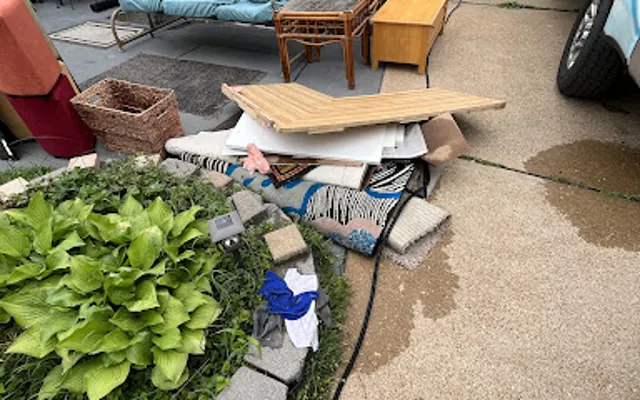
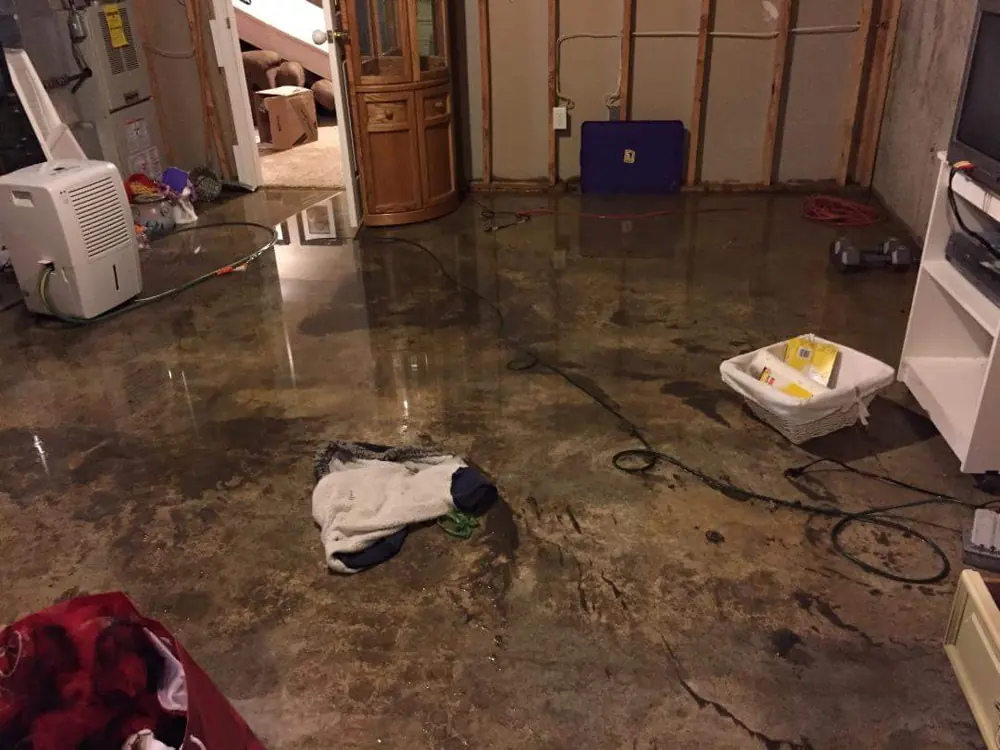
A break in an aging city water main or a property's own service line can send water surging across a yard, under a driveway, or toward a home's foundation within minutes. Technicians respond around the clock to extract water that has reached the structure and document the damage while the utility or a qualified plumber addresses the line itself.

A crew is typically on site within about an hour to assess how far water reached the structure and whether extraction is needed indoors.
Water that entered a garage, crawlspace, or lower flooring is extracted with truck-mounted or portable pumps.
Meters and thermal imaging confirm whether water reached wall cavities, insulation, or subfloor beyond the visible flooding.
Air movers and dehumidifiers dry any affected interior space, with photos and moisture readings logged for the insurance claim.

While help is on the way, these first steps, done only where it is safe, limit the damage and protect the insurance claim.
Shut the supply off at the source, or close the home's main valve if the source is not obvious. Stopping the flow limits the damage more than anything else.
Switch off electricity to the affected area, but only if the breaker can be reached without standing in or touching the water.
Get a crew dispatched right away. The sooner extraction and drying begin, the more flooring, drywall, and belongings can be saved.
Take photos and a short video of the water and the affected rooms before anything is moved, so the insurance claim starts strong.
Water main break cleanup in El Cajon typically runs from about $400 for extraction and drying of a garage or crawlspace to $3,000 or more when the water reached finished living space and flooring or drywall has to be removed. The water main or service line repair itself is handled by the city utility or a qualified plumber, separate from the interior cleanup. Coverage for main break damage depends on whether the break was on the city side or the homeowner's service line, so documentation of where the water originated matters for the claim.
Crews reach El Cajon and inland East County fast, from Bostonia, Fletcher Hills, and Casa de Oro-Mount Helix to La Mesa, Santee, Spring Valley, Lakeside, and Lemon Grove. See the full list on the areas served across El Cajon page.
See all areas servedEvery loss is photographed, measured, and logged from the first visit, so the paperwork holds up with the insurance carrier.
Technicians follow recognized IICRC drying standards and prove it with daily moisture readings on El Cajon homes, not guesswork.
Emergency dispatch any hour of the day or night, with a real crew on the way across the valley, not a callback in the morning.
A real crew dispatched any hour, not a callback in the morning.
Trained technicians following recognized IICRC drying standards.
Truck-mounted, portable, and submersible for any size loss.
The loss is documented and billed to the carrier directly.
It depends on where the break occurs. A break in the street-side main is typically the utility's responsibility, while a break in the service line on the property is usually the homeowner's. Documentation of the location supports whichever claim applies.
No, the line itself is repaired by the city utility or a qualified plumber. The crew handles extraction and drying of any water that reached the structure.
It depends on grading and how quickly the water is shut off. Water often pools in garages, crawlspaces, or low points near the foundation rather than entering finished living space, but each situation is different.
Coverage often depends on whether the break was on the city main or the homeowner's own service line, and on the specific policy. Photo and moisture documentation from the cleanup visit supports whichever claim is filed.
As soon as the water is shut off and the area is safe. Standing water against a foundation or in a crawlspace can start wicking into structural materials within hours.
El Cajon crews are on call 24 hours a day, local and fast, and can be on the way within the hour.
Call (619) 350-2773