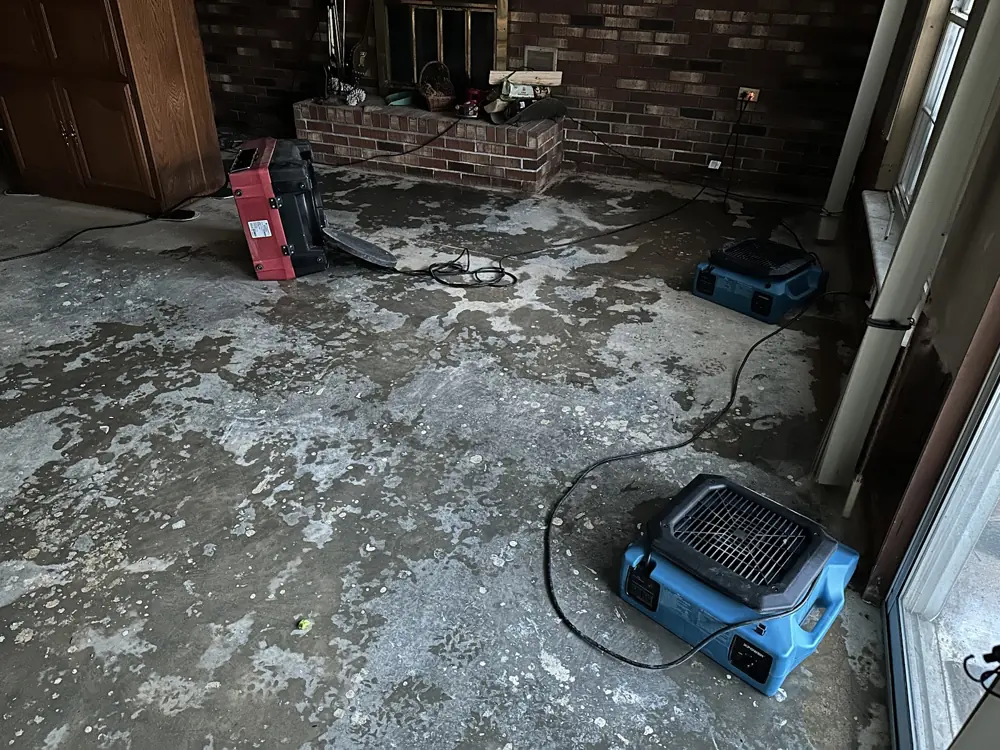
Garages often sit at the lowest point of an El Cajon property's slab, and with water heaters, washers, and storage commonly kept there, a failed tank or a heavy winter storm can leave standing water across the concrete within minutes. Technicians extract the water, check what was stored on the floor, and dry the space before rust and mold set in.

The technician identifies whether the source is a failed water heater, a supply line, or storm runoff, and confirms the source is stopped.
Standing water is extracted from the concrete floor, and stored items are checked and separated by what can be saved versus what is compromised.
Moisture meters check garage drywall, baseboard, and any adjoining interior wall for water that wicked upward from the floor.
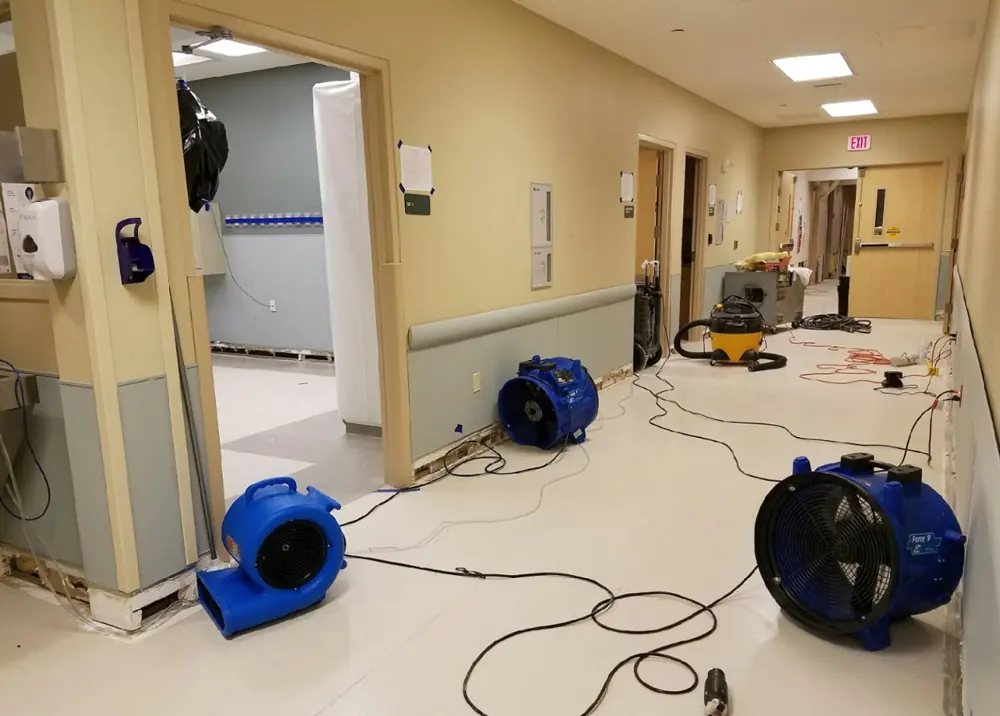
Air movers and dehumidifiers dry the garage to a verified target, with photos and readings logged for the insurance claim.

While help is on the way, these first steps, done only where it is safe, limit the damage and protect the insurance claim.
Shut the supply off at the source, or close the home's main valve if the source is not obvious. Stopping the flow limits the damage more than anything else.
Switch off electricity to the affected area, but only if the breaker can be reached without standing in or touching the water.
Get a crew dispatched right away. The sooner extraction and drying begin, the more flooring, drywall, and belongings can be saved.
Take photos and a short video of the water and the affected rooms before anything is moved, so the insurance claim starts strong.
Garage water damage cleanup in El Cajon typically runs from about $300 for extraction and drying of a bare concrete floor to $2,000 or more when drywall, baseboard, and stored belongings are affected. A failed water heater tank tends to release more water quickly than a slow supply line leak, which affects the total cleanup scope. The water heater or supply line repair is handled by a qualified plumber separately from the cleanup. Sudden failures and storm-driven flooding are commonly covered by homeowners insurance, with documentation from the visit supporting the claim.
Crews reach El Cajon and inland East County fast, from Bostonia, Fletcher Hills, and Casa de Oro-Mount Helix to La Mesa, Santee, Spring Valley, Lakeside, and Lemon Grove. See the full list on the areas served across El Cajon page.
See all areas servedEvery loss is photographed, measured, and logged from the first visit, so the paperwork holds up with the insurance carrier.
Technicians follow recognized IICRC drying standards and prove it with daily moisture readings on El Cajon homes, not guesswork.
Emergency dispatch any hour of the day or night, with a real crew on the way across the valley, not a callback in the morning.
A real crew dispatched any hour, not a callback in the morning.
Trained technicians following recognized IICRC drying standards.
Truck-mounted, portable, and submersible for any size loss.
The loss is documented and billed to the carrier directly.
Garages often sit at the lowest point of the property's slab and commonly house the water heater, so both storm runoff and appliance failures tend to end up there first.
No, water heater repair goes to a qualified plumber, and driveway or drainage issues go to a general contractor. The crew handles the water damage extraction and drying.
It depends on the material and how long it sat in water. Sealed plastic bins often protect their contents, while cardboard boxes and porous items are frequently a total loss.
Sudden failures like a ruptured water heater or storm-driven flooding are commonly covered. Damage from a known, long-ignored drainage issue is more likely to be questioned.
Within the same day if possible. Standing water on a garage floor can wick into drywall and baseboard and starts creating rust and mold risk on stored items within a day or two.
El Cajon crews are on call 24 hours a day, local and fast, and can be on the way within the hour.
Call (619) 350-2773