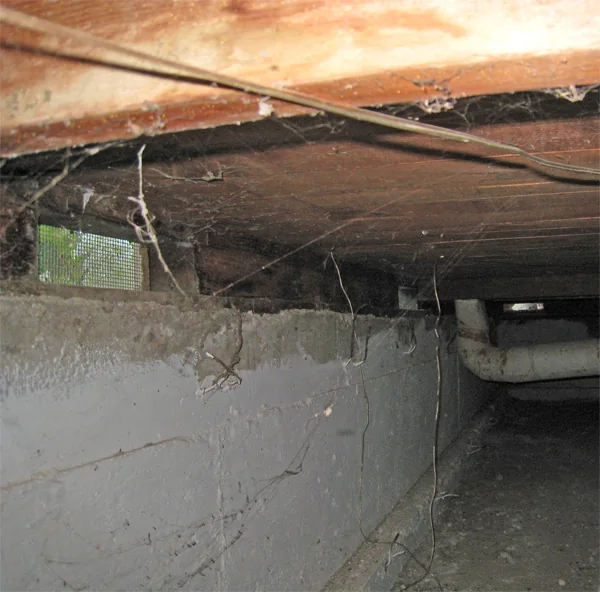
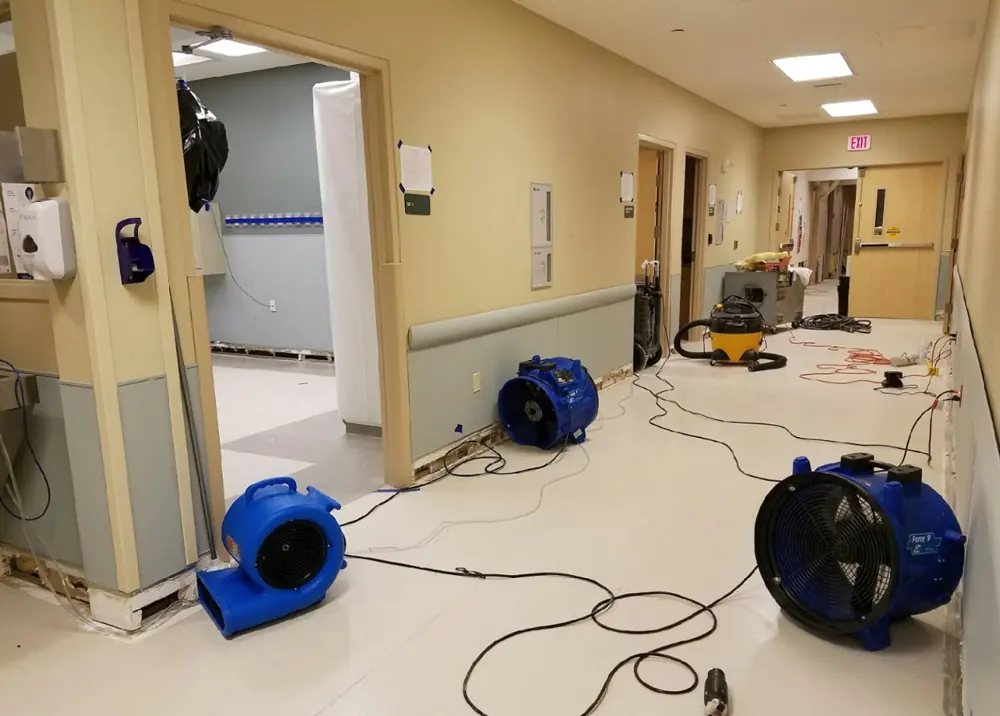
El Cajon's older raised-foundation homes have a crawlspace beneath the living area, and a plumbing leak or storm runoff can sit under the house for weeks before anyone notices the smell or the soft floor above. Crews respond within about an hour to extract and dry.

A crew is typically on-site within about an hour to access the crawlspace and identify the water source and extent.
Pumps and extraction equipment remove standing water from the crawlspace floor, working around piers and ductwork.
Meters check the floor joists, subfloor, and any insulation above the crawlspace for saturation that needs to be addressed.
Air movers and dehumidifiers are staged to dry the space, with moisture readings tracked until the crawlspace reaches a verified dry target.

While help is on the way, these first steps, done only where it is safe, limit the damage and protect the insurance claim.
Shut the supply off at the source, or close the home's main valve if the source is not obvious. Stopping the flow limits the damage more than anything else.
Switch off electricity to the affected area, but only if the breaker can be reached without standing in or touching the water.
Get a crew dispatched right away. The sooner extraction and drying begin, the more flooring, drywall, and belongings can be saved.
Take photos and a short video of the water and the affected rooms before anything is moved, so the insurance claim starts strong.
Crawlspace water removal in El Cajon typically runs from about $600 to $3,000 depending on how much standing water is present, how long it has been sitting, and whether joist or insulation damage requires removal and replacement. A recently discovered leak sits on the lower end; a long-standing issue with saturated insulation and musty odor sits higher. When the source was a sudden plumbing failure, the cleanup is often covered under a standard homeowner policy and documented for the claim.
Crews reach El Cajon and inland East County fast, from Bostonia, Fletcher Hills, and Casa de Oro-Mount Helix to La Mesa, Santee, Spring Valley, Lakeside, and Lemon Grove. See the full list on the areas served across El Cajon page.
See all areas servedEvery loss is photographed, measured, and logged from the first visit, so the paperwork holds up with the insurance carrier.
Technicians follow recognized IICRC drying standards and prove it with daily moisture readings on El Cajon homes, not guesswork.
Emergency dispatch any hour of the day or night, with a real crew on the way across the valley, not a callback in the morning.
A real crew dispatched any hour, not a callback in the morning.
Trained technicians following recognized IICRC drying standards.
Truck-mounted, portable, and submersible for any size loss.
The loss is documented and billed to the carrier directly.
No, most newer construction is slab-on-grade, but a number of the city's older raised-foundation homes do have a crawlspace beneath the main living area.
Common signs include a musty odor coming through floor vents, a noticeably soft or springy spot in the flooring above, or visible moisture near the crawlspace access hatch.
Often, yes, if the water is extracted and the joists are dried before rot sets in. Long-standing moisture that has already softened wood may require a qualified contractor to sister or replace affected joists.
Slow leaks in drain or supply lines running under the house, and storm runoff that seeps under a raised foundation during infrequent heavy rain, are the most common causes.
When the source is a sudden plumbing failure, it is often covered similarly to other water damage. Long-term seepage from grading or drainage issues is less likely to be covered, so documentation helps clarify the cause for the claim.
El Cajon crews are on call 24 hours a day, local and fast, and can be on the way within the hour.
Call (619) 350-2773